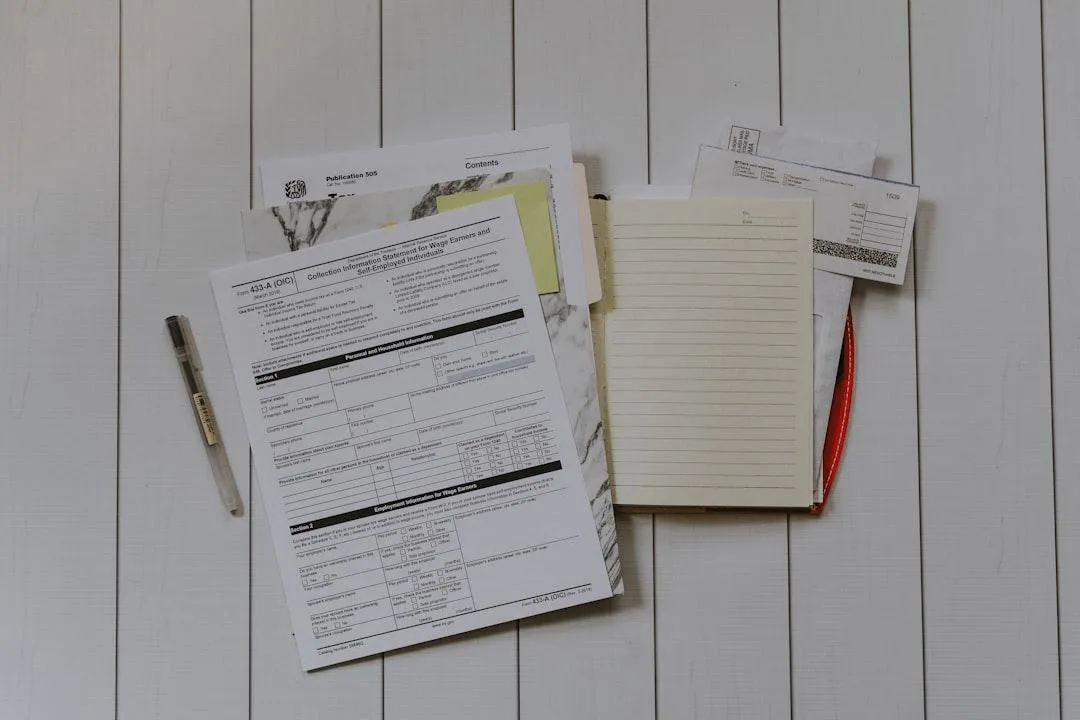
The Stress-Free FHA Loan Document Checklist
What Goes on an FHA Loan Document Checklist (And How to Get Ready Fast)
Your FHA loan document checklist is the foundation of a smooth mortgage application. Here is a quick overview of what you will need:
Core FHA Loan Documents at a Glance:
Identity: Driver's license, Social Security card, signed SSA-89 form
Residence history: 2-year address history
Employment & income: 30 days of pay stubs, 2 years of W-2s, 2 years of tax returns
Assets: 2 most recent consecutive months of bank statements
Down payment: Source documentation for your 3.5% minimum (including gift letters if applicable)
Property: Signed sales contract, FHA appraisal report
Self-employed borrowers: Business tax returns, profit and loss statement, business balance sheet, CPA letter
Veterans: DD-214 and Certificate of Eligibility
Most documents must be no more than 120 days old at closing — or 180 days for new construction.
Getting your paperwork organized before you meet with a lender is one of the single biggest things you can do to speed up your approval. Missing or outdated documents are the most common reason FHA loans stall in underwriting. The good news is that once you know exactly what is needed, the process becomes far less overwhelming.
I'm Erez Shimoni, a mortgage broker with 26 years of industry experience who has guided countless borrowers through the FHA loan document checklist process from start to closing. I'll walk you through every document category so you can walk into your application fully prepared.
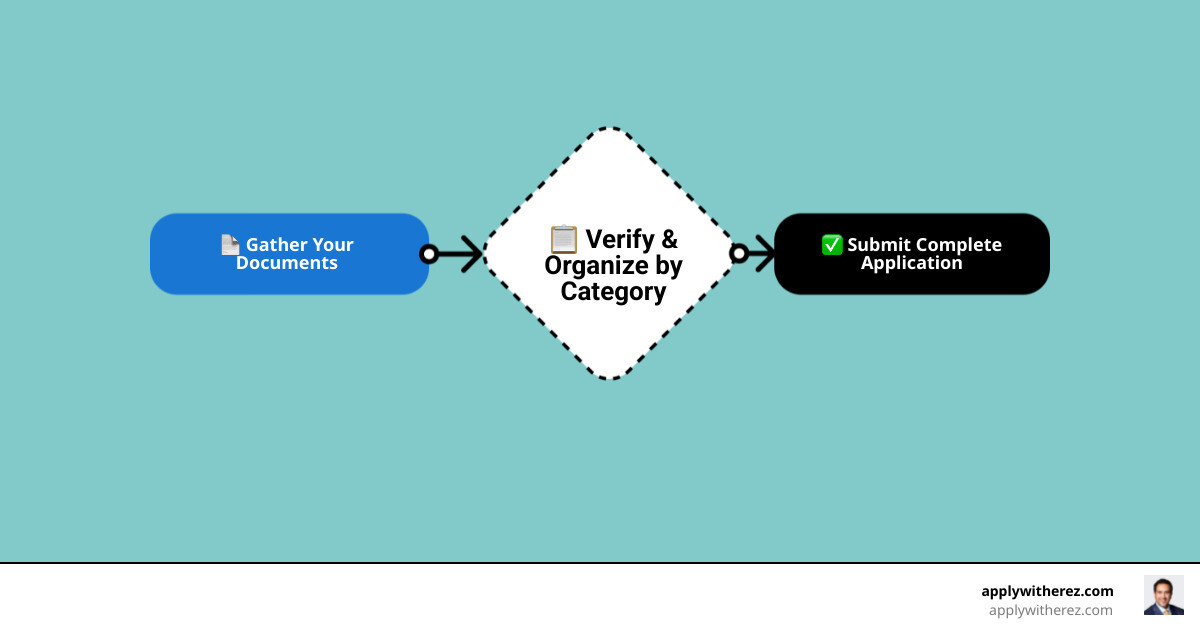
The Ultimate FHA Loan Document Checklist
When you set out to buy a home, the sheer volume of paperwork can feel like a part-time job. But behind all the requests for PDFs and signatures is a highly structured process designed to protect both you and the lender.
One of the most critical rules to understand right out of the gate is the document age limit. Under official HUD rules, almost all underwriting documents—including bank statements, pay stubs, and credit reports—must be no more than 120 days old at the time the loan closes. If you are building a home, this limit is extended to 180 days for new construction properties.
Why does this matter? If your loan process takes longer than expected (perhaps due to title issues, appraisal delays, or negotiations), you will likely need to provide updated bank statements and pay stubs to your loan officer. Keeping your files organized from day one makes pulling these updates a breeze. You can read more about these exact timing requirements in the official FHA documentation guidelines.
Identity Verification for Your FHA Loan Document Checklist
Before we can look at your bank accounts or calculate your income, we have to verify exactly who you are. This is not just a formality; it is a federal requirement to prevent identity theft and mortgage fraud.
For a complete FHA loan document checklist, you will need to provide:
A valid government-issued photo ID: Typically your driver's license, state ID, or passport.
Your Social Security Card: Lenders must validate your Social Security Number (SSN) directly.
A signed Form SSA-89: This form authorizes the Social Security Administration to verify your SSN directly with the lender.
A complete 2-year address history: You must provide the physical addresses of all residences you have lived in over the past two consecutive years.
If you are a First Time Home Buyer, gathering this basic information early ensures your credit report matches your identity records perfectly.
Gift Funds and Large Deposits on the FHA Loan Document Checklist
One of the greatest benefits of an FHA loan is the low down payment requirement—just 3.5% for qualified borrowers. However, we have to verify where every single penny of that down payment is coming from.
If you are using your own savings, you must provide your two most recent consecutive months of bank statements. But what if you are receiving help from a family member? FHA guidelines are highly generous when it comes to gift funds, but they require a strict paper trail:
A Signed Gift Letter: This is a document signed by both you and the donor stating that the funds are a gift and do not have to be repaid.
Donor Bank Statements: Proof that the donor had the funds to give.
Transfer Documentation: A copy of the donor's check, wire receipt, and your bank statement showing the exact deposit clearing your account.
Additionally, lenders will scrutinize your bank statements for any "large deposits." Any deposit that is not from your regular payroll and has not been "seasoned" (sitting in your account for at least 90 days) must be documented and sourced. If you sold a car, for example, you will need the bill of sale and proof that the cash was deposited.
You can cross-reference these asset requirements using a standard FHA submission checklist. If you are weighing your down payment options, looking into the Best First-Time Buyer Mortgages 2026 can give you a clearer picture of how FHA requirements compare to other programs.
Income, Employment, and Financial Ratio Documents
To qualify for an FHA loan, we must establish that you have a stable, ongoing source of income. This means verifying a continuous two-year employment history. If you have changed jobs within those two years, don't panic! As long as you have remained in the same line of work or can show a logical career progression, you can still qualify.
Lenders will calculate two critical debt-to-income (DTI) ratios to determine how much home you can afford:
Front-End DTI (Mortgage Payment Ratio): This is your projected monthly housing expense (principal, interest, taxes, homeowners insurance, and mortgage insurance) divided by your gross monthly income. For standard FHA qualification, this should ideally not exceed 31%.
Back-End DTI (Total Fixed Payment Ratio): This includes your projected housing payment plus all recurring monthly debts (credit cards, auto loans, student loans, etc.) divided by your gross monthly income. The standard FHA limit for this ratio is 43%.
DTI Ratio Type Standard FHA Limit What It Includes Front-End DTI 31% Principal, Interest, Taxes, Insurance, and MIP Back-End DTI 43% Mortgage payment + credit cards, auto loans, student loans, and other recurring debts
Note: Some borrowers with strong "compensating factors" (such as high credit scores or substantial cash reserves) may be approved for higher ratios through automated underwriting systems.
To ensure you don't accidentally throw off these ratios during your home search, be sure to read about the 9 Mistakes That Can Affect Your Mortgage.
Self-Employed Borrower Requirements
If you work for yourself, you are considered self-employed under mortgage guidelines if you own 25% or more of a business, or if no federal withholding taxes are deducted from your paycheck.
Self-employed borrowers must provide a bit more paperwork to prove their income is stable and likely to continue:
Two Years of Tax Returns: You must provide both your personal and business federal tax returns (including all schedules, K-1s, and W-2s/1099s) for the past two consecutive years.
Year-to-Date Profit & Loss (P&L) Statement: A signed document showing your business's income and expenses for the current year.
Current Business Balance Sheet: To verify the financial health of your company.
CPA Letter: A letter from your accountant confirming your business is active and operational.
Corporate Minutes: If your business is incorporated, you may need corporate minutes authorizing your salary.
One unique perk for self-employed individuals: real estate depreciation can often be added back to your qualifying income, though equipment depreciation cannot. If you are preparing your business finances for a mortgage, taking Five Simple Steps to Get Your Finances in Order is a highly recommended starting point.
Documenting Non-Wage Income Sources
If you receive income from sources other than a traditional hourly wage or salary, you can absolutely use those funds to qualify for your FHA loan. However, they must be meticulously documented:
Alimony and Child Support: You are never required to disclose child support or alimony unless you want to use those funds to qualify for the loan. If you do use them, you must provide a copy of the court-ordered divorce decree or separation agreement, along with proof of consistent receipt for the past 12 months.
Rental Income: If you own other properties, you must provide your tax returns showing Schedule E, along with current, active lease agreements.
Social Security and Disability: Provide your current year's award letter and proof of regular deposits.
Pension and Retirement Income: Provide 1099-R forms and recent distribution statements.
FHA Loan Requirements for Veterans
Military veterans have access to incredible lending options. While many choose a VA Home Loan due to its 0% down payment benefit, there are scenarios where an FHA loan is highly competitive.
If you are a veteran or active-duty service member applying for an FHA loan, you will need to add two key documents to your FHA loan document checklist:
DD Form 214 (Certificate of Release or Discharge from Active Duty): To verify your military service history and discharge status.
Certificate of Eligibility (COE): While traditionally a VA loan document, lenders often pull this to verify active duty status or service eligibility.
Property-Specific Documents and the FHA Amendatory Clause
Once you find the perfect home and your offer is accepted, the focus of the documentation shifts from you to the property itself. Lenders must verify that the home meets basic safety, security, and soundness standards before they will agree to finance it.
The primary tool for this is the FHA appraisal. Unlike a standard home inspection (which is highly recommended but optional), an FHA appraisal is mandatory. The appraiser will check the home's structure, heating, electrical systems, and roof to ensure they comply with HUD guidelines. If the appraiser notes required repairs (such as peeling paint on a home built before 1978 or missing handrails), those repairs must be completed and re-inspected before the loan can close. You can review the exact property standards in the official HUD Chapter 3 guidelines.
The FHA Amendatory Clause and Real Estate Certification
The FHA Amendatory Clause is one of the most important consumer protection documents in the entire mortgage process. By federal law, this clause must be signed by both the buyer and the seller if the buyer was not informed of the appraised value before signing the sales contract.
The clause states that you, the buyer, cannot be forced to complete the purchase or forfeit your earnest money deposit if the home's appraised value comes in lower than the agreed-upon sales price. It acts as a financial escape hatch. Along with the Amendatory Clause, all parties will sign a Real Estate Certification confirming that the entire agreement is honest, transparent, and free of undisclosed side-agreements.
Frequently Asked Questions about FHA Loan Documents
How long are FHA loan documents valid before closing?
Under HUD regulations, standard underwriting documents (such as bank statements, pay stubs, and credit reports) are valid for up to 120 days at the time of loan closing. If you are financing a newly constructed home, the validity period is extended to 180 days. If your loan process takes longer than this window, your lender will ask you to submit fresh, updated copies of your documents.
Can a real estate agent submit my financial documents to the lender?
No. FHA guidelines strictly prohibit lenders from accepting credit, employment, or income documents that have been handled or transmitted by an interested third party to the transaction. This includes real estate agents, builders, and sellers. To prevent mortgage fraud, you must submit all of your financial documents directly to your loan officer or upload them through a secure borrower portal.
Do I have to disclose alimony or child support income?
No, you are not required to disclose alimony, child support, or separate maintenance income on your loan application. However, if you choose not to disclose it, you cannot use those funds to help you qualify for the mortgage or lower your debt-to-income ratios. If you do wish to use this income, you must provide a court decree showing the ordered payments and proof that you have received them consistently for at least 12 months.
Conclusion
Applying for a mortgage doesn't have to be a stressful, confusing experience. By using this FHA loan document checklist to gather your paperwork ahead of time, you can cut weeks off your approval timeline and avoid the last-minute scramble that so many buyers experience.
At applywitherez.com, we specialize in making the mortgage process as clear, straightforward, and stress-free as possible. Whether you are ready to Buy a Home or simply want to explore your options, we are here to help you navigate every step of the journey. Let's get your paperwork organized and open the door to your new home! Ensure you also choose the Best Type of Mortgage for First Time Buyers by speaking with us today.
Our office is located at 26 Wills Way, Suite 10. Reach out to us to schedule your personalized mortgage consultation.