
Winning the Housing Game with the Best First Time Buyer Mortgages 2026
Why Finding the Best First Time Buyer Mortgages in 2026 Is Harder Than Ever
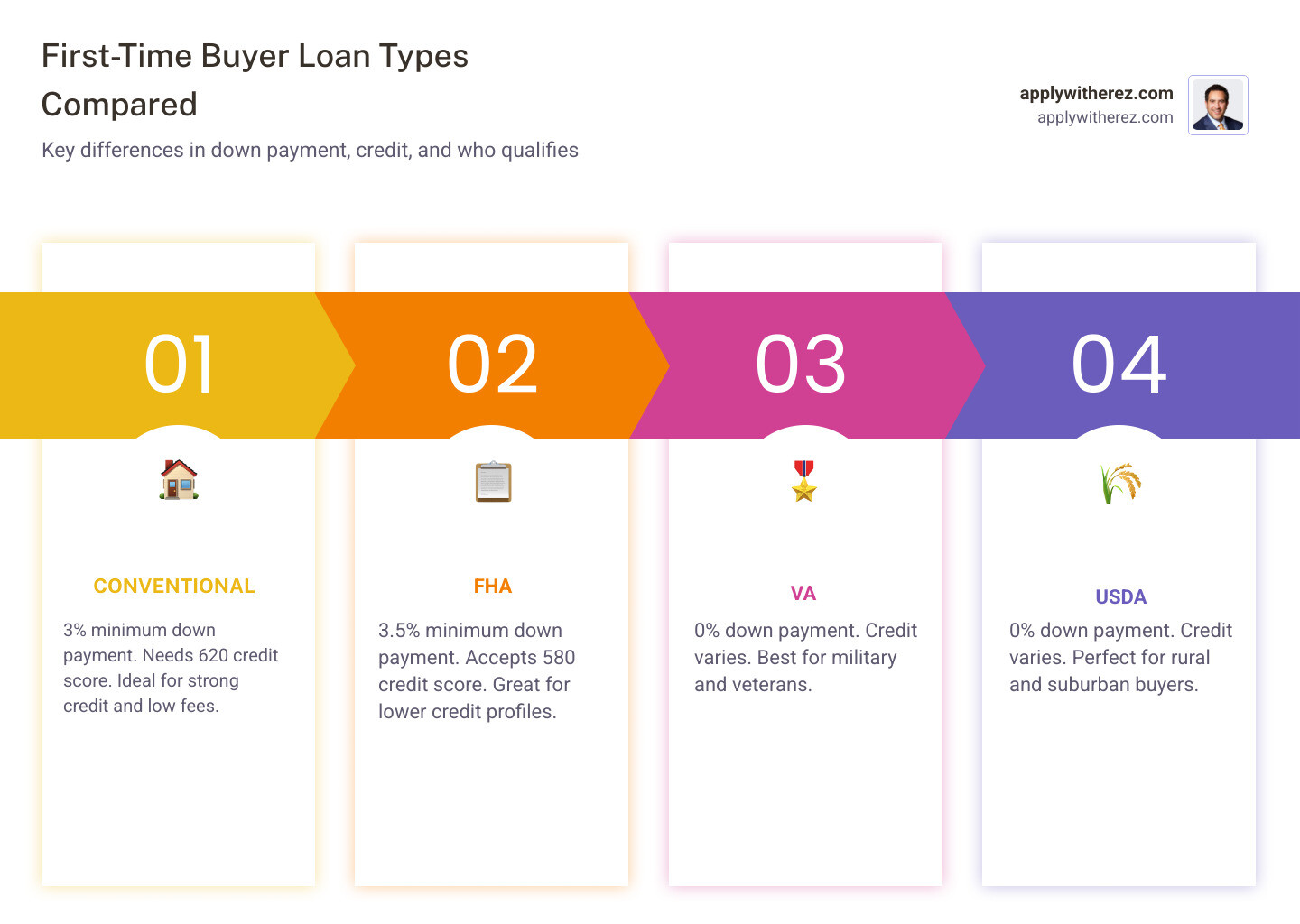
The best first time buyer mortgages 2026 has to offer come down to a handful of key options. Here's a quick comparison to help you zero in fast:
Loan Type Min. Down Payment Min. Credit Score Best For Conventional 3% 620 Strong credit, low fees FHA 3.5% 580 Lower credit scores VA 0% Varies Military/veterans USDA 0% Varies Rural/suburban buyers Conventional (1% down) 1% 620 Low savings, lender grant covers 2%
Buying your first home in 2026 is exciting — but the mortgage market can feel overwhelming. There are dozens of lenders, multiple loan types, and a flood of fine print standing between you and your front door.
The stakes are real. The median down payment for first-time buyers hit 10% in 2025 — the highest since 1989. And in competitive markets like Charlotte and Raleigh, buyers are putting down over $54,000 on average. Getting the wrong mortgage can cost you thousands.
The good news? Shopping just five lenders instead of one could save you around $3,000 over the life of your loan. Knowing where to look makes all the difference.
I'm Erez Shimoni, a mortgage broker with 26 years of experience helping buyers navigate exactly this kind of decision — and I've put together this guide to cut through the noise and show you the best first time buyer mortgages 2026 has available, so you can compare your options with confidence. Let's get into it.
How to Choose the Best First Time Buyer Mortgages 2026
The best mortgage is not always the one with the flashiest advertised rate. For first-time buyers, the right fit usually comes down to six things:
Low cash needed upfront
A realistic credit score requirement
Reasonable fees and APR
Fast, reliable preapproval
A smooth closing process
Access to down payment help if needed
We recommend judging your options in this order:
Loan type
Cash to close
APR
Monthly payment
Closing timeline
Support and responsiveness
That order matters. A mortgage with a slightly lower rate but thousands more due at closing can still be the worse deal.
What counts as the best first time buyer mortgages 2026 for different buyers
Different buyers need different wins:
If you have limited savings, low-down-payment conventional loans, FHA, VA, USDA, or select 1% down options may be strongest.
If your credit is bruised, FHA and manually underwritten loans can be more forgiving.
If you are active-duty or a veteran, VA financing often deserves first look because it can offer 0% down.
If you are self-employed, clean income documentation matters more than catchy ads.
If you need a fast close, the lender's process and loan officer responsiveness can matter as much as rate.
If you need help with upfront funds, down payment assistance can completely change what is affordable.
In other words: "best" is personal.
Who qualifies as a first-time homebuyer in 2026
In 2026, a first-time homebuyer is often defined as someone who has not owned a primary residence in the past three years. That means you may still qualify even if you owned a home before.
Common rules include:
You have not owned a primary home in the last 3 years
The home will be your primary residence
You meet the income and property rules for the program you want
You complete any required education course if using assistance
That 3-year rule shows up often in loan programs, tax credit programs, and state housing agency assistance. For a broad overview of how first-time buyer programs are commonly defined, buyers can also review the first-time home buyer entry.
The mortgage metrics that matter more than the headline rate
A low interest rate gets attention. APR tells a fuller story.
Focus on:
APR: Includes interest plus certain loan costs
Points: Upfront fees paid to reduce the rate
Cash to close: Down payment plus closing costs minus credits
PMI or mortgage insurance: A major cost for many low-down-payment buyers
Rate lock: Protects you if rates rise while you are under contract
Loan Estimate: Your key comparison document
When you compare quotes, do not just compare rate. Compare the same loan type, same lock period, same down payment, and same points structure.
A good rule: get at least 4 to 5 quotes inside a short shopping window. Research shows five additional quotes can save around $3,000 over the life of the loan.

Best First-Time Buyer Mortgage Types to Compare First
Before comparing lenders, compare loan categories. That is where most savings and stress reduction happen.
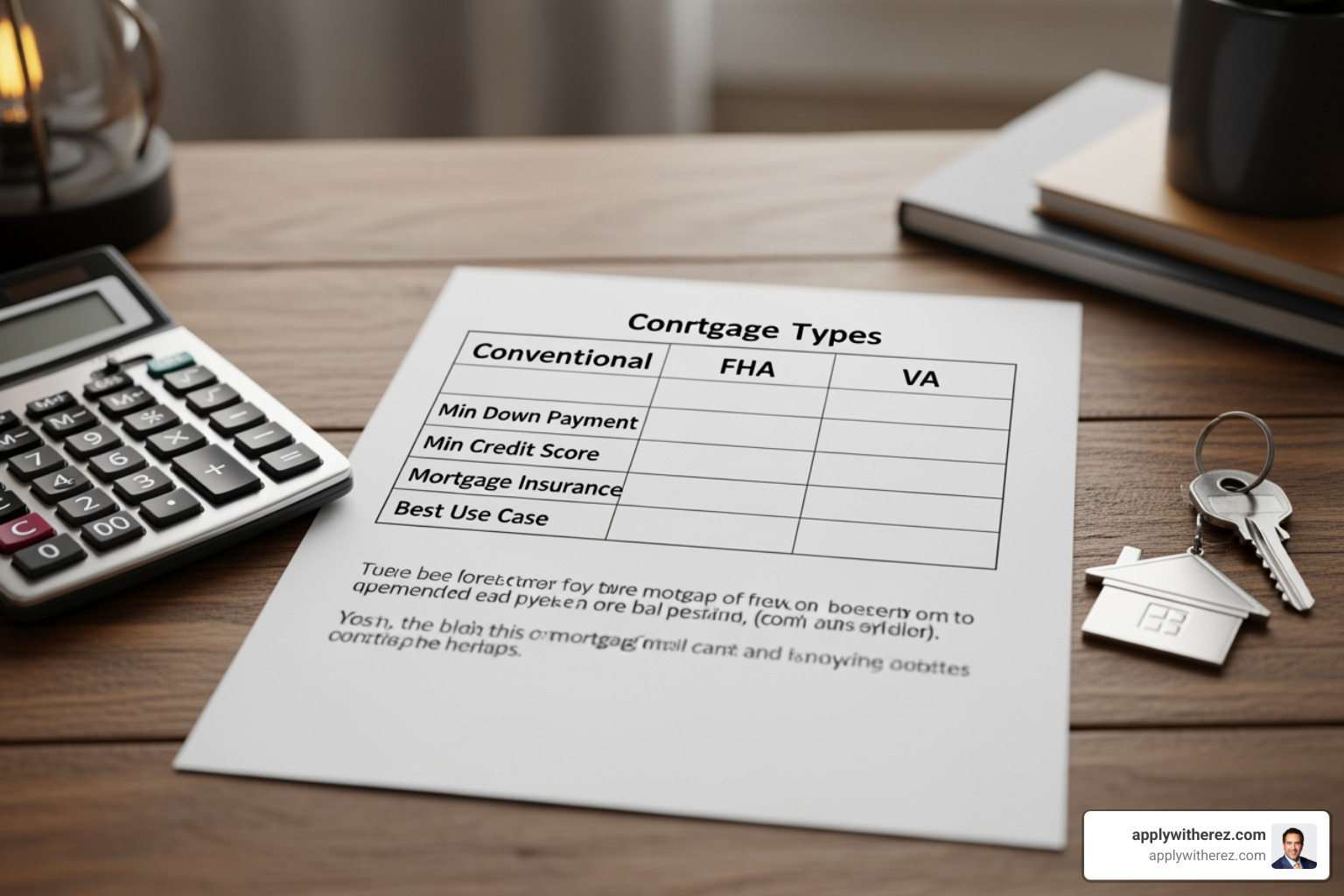
Loan Type Typical Min. Down Typical Min. Score Mortgage Insurance Best Use Case Conventional 3% 620 Usually required under 20% down Buyers with decent credit FHA 3.5% 580 Required Buyers with lower scores VA 0% Varies by lender No monthly PMI Eligible military borrowers USDA 0% Varies by lender Has guarantee fees Rural and some suburban areas
Conventional and FHA are the two most common starting points for first-time buyers, but VA and USDA can be dramatically better when you qualify.
Best first time buyer mortgages 2026 for low down payments
Here is the quick version:
Conventional: 3% down is possible for qualified first-time buyers
FHA: 3.5% down with a 580+ score is standard
VA: 0% down for eligible military borrowers
USDA: 0% down in eligible areas
Select conventional programs: 1% down, with lender assistance covering the rest to reach 3%
Gift funds may help in many cases, and some programs allow family gifts for part or all of the down payment. Some also require reserve funds, especially for certain property types or higher-risk files.
A big reality check for 2026: just because you can buy with 3% down does not mean 3% is your total cash needed. Closing costs, prepaid taxes, insurance, inspections, appraisal, and moving costs all stack up fast.
Best first time buyer mortgages 2026 for lower credit scores
Credit flexibility varies a lot by loan type.
A common baseline looks like this:
Conventional: 620 is the usual starting point
FHA: 580 for 3.5% down
Below 580: possible in some cases, but often harder and more expensive
VA and USDA: no universal government minimum, but lenders often set overlays
If your score is lower or your credit file is thin, options may include:
FHA financing
Manual underwriting
Using rent history
Using utility or other nontraditional credit
Strengthening compensating factors like stable income or extra reserves
That matters because plenty of first-time buyers pay rent perfectly for years but do not have thick traditional credit profiles. Some lenders and loan structures can work with that. Some cannot.
Minimum down payment requirements by loan type
Here are the key minimums most first-time buyers should know:
Conventional: 3%
FHA: 3.5%
VA: 0%
USDA: 0%
Important fine print:
Conventional loans usually require PMI when you put less than 20% down.
FHA loans require mortgage insurance, often for longer.
USDA has location eligibility rules, so the home must be in an approved area.
VA funding fees may apply, though some borrowers are exempt.
If you want help estimating real monthly costs, use our mortgage calculator.
How to Compare Lenders Without Getting Burned
Comparing lenders is where first-time buyers either save money or accidentally buy a headache.
There are four main paths:
Banks
Credit unions
Online lenders
Local brokers
Each can work. Each can also be frustrating if the fit is wrong.
One underappreciated detail from real buyer experience: responsiveness wins deals. A lender who answers on a Saturday night may help you get the house. A cheaper quote from someone who disappears for two days may not.
Also remember:
Mortgage credit shopping is generally safest inside a 14- to 45-day window, depending on scoring model
Preapproval letters often stay valid for 90 to 120 days
Many mortgages get sold to a new servicer after closing, so origination experience matters more than promises about servicing
Which lenders offer the smoothest and least stressful process
The smoothest process usually includes:
Online application
Secure document upload
Fast preapproval
Clear milestone updates
eClose or streamlined signing where available
A loan officer who actually answers calls and texts
What we tell buyers to ask before choosing anyone:
How quickly can you issue a fully reviewed preapproval?
Can you close in 20 to 30 days if needed?
Will you answer on weekends?
What documents do you need upfront?
What usually delays your closings?
Stress rarely comes from one giant problem. It usually comes from ten small surprises.
Pros and cons of banks, credit unions, online lenders, and local brokers
Banks
Pros:
Familiar brand
Branch access
One-stop-shop feeling
Cons:
Can be less flexible
May move slower
Service quality varies a lot by loan officer
Credit unions
Pros:
Often competitive pricing
Member-focused service
Sometimes lower fees
Cons:
Can have tighter membership or eligibility requirements
Sometimes less flexible on unusual files
Digital tools may be simpler
Online lenders
Pros:
Fast application
Good tech
Easy document upload
Cons:
Can feel less personal
Some buyers report a convenience premium
Closing and title coordination may feel less hands-on
Local brokers
Pros:
Access to multiple loan options
Personalized advice
Local market familiarity
Cons:
Quality varies by broker
You still need to compare fees and execution
How to get preapproved and compare offers the smart way
The smart process looks like this:
Get preapproved, not just prequalified
Submit income, asset, and ID documents
Let the lender pull credit
Ask for a written Loan Estimate
Compare APR, rate, points, and Box A fees
Ask about timeline and lock options
Negotiate using written offers
When comparing Loan Estimates, focus especially on:
Origination charges
Discount points
Underwriting or admin fees
Lender credits
Estimated cash to close
Box A on page 2 is often the fastest way to compare lender-controlled charges.
If you are ready to start that process, visit our Buy a Home page.
Down Payment Assistance, Grants, and Tax Credits in 2026
Down payment assistance can turn a "maybe next year" buyer into a "why not now?" buyer.
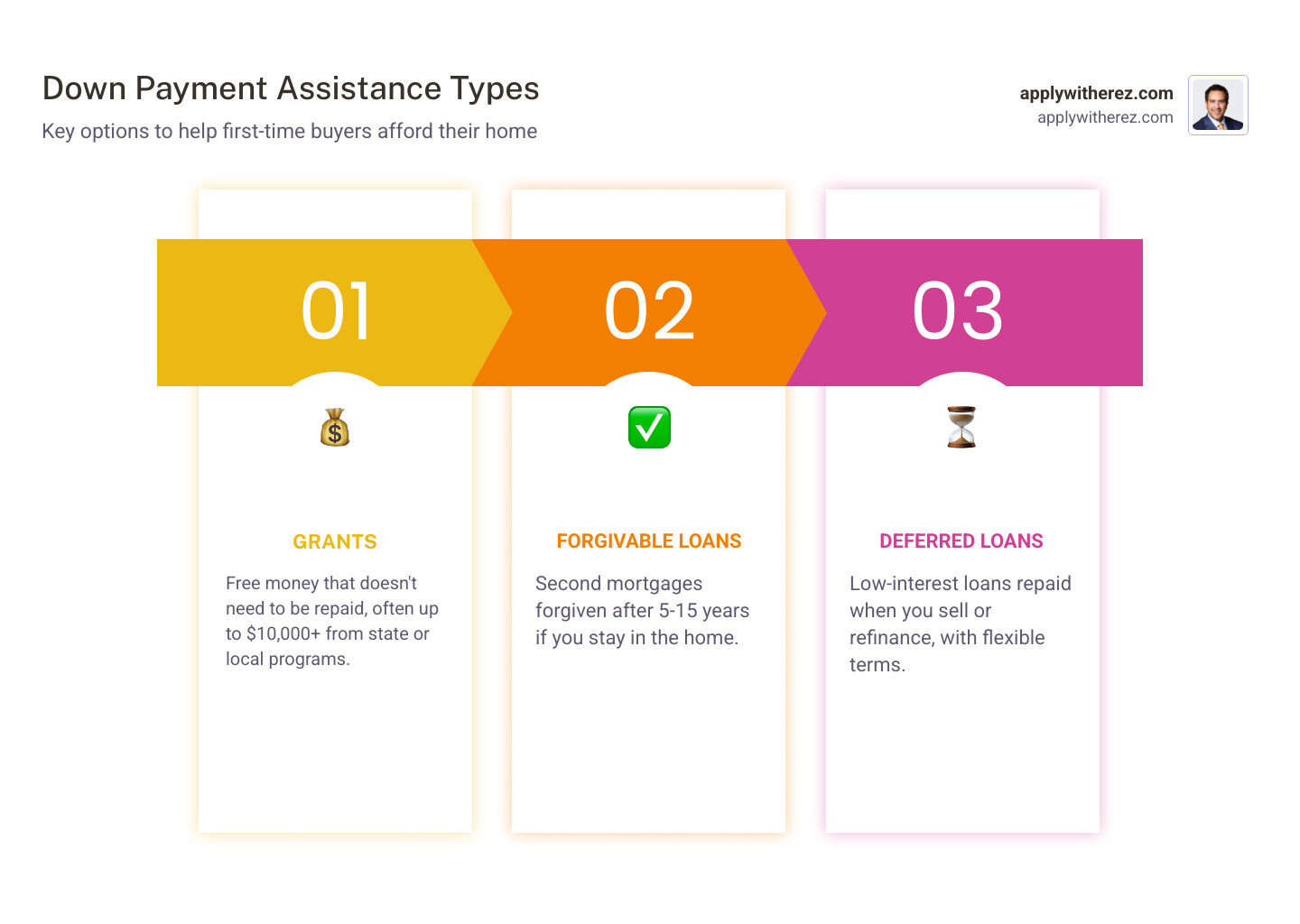
The main categories are:
Grants
Forgivable second loans
Deferred-payment second loans
Mortgage Credit Certificates
Lender credits
Employer or nonprofit assistance
These programs often help with:
Down payment
Closing costs
Prepaids
Tax savings after closing
National assistance options first-time buyers should check
In 2026, first-time buyers should ask about:
State housing agency programs
Local city or county grants
Employer homebuyer benefits
Nonprofit assistance
Lender-specific credits
Partner-agent credits where available
Some programs are income-based. Some are for first-time buyers only. Some allow repeat buyers if they meet the 3-year rule. Many require a homebuyer education course.
Also, ask whether assistance is:
A true grant
Forgivable after a set number of years
Repaid when you sell, refinance, or move out
Structured as a tax credit
Those details matter a lot.
North Carolina first-time buyer programs worth knowing in 2026
North Carolina has been one of the stronger states for assistance availability. As of Q4 2025, 85% of the state's 54 down payment assistance programs reportedly still had funding available.
Key examples include:
NC 1st Home Advantage Down Payment, which can provide up to $15,000 in assistance and may be forgiven after 15 years
NC Home Advantage Tax Credit, which may offer up to $2,000 per year as a federal tax credit tied to mortgage interest
A few useful market context points:
First-time buyers in Charlotte averaged about $54,745 down in 2025
First-time buyers in Raleigh averaged about $55,646 down in 2025
That is exactly why assistance matters. Even for buyers who qualify for a 3% down mortgage, the real cash hurdle can still be painful.
State-specific programs and how they usually work
Most state and local first-time buyer programs come with some combination of:
Income limits
Purchase price caps
Primary residence requirement
Homebuyer course requirement
Minimum credit score
Approved lender participation
Repayment triggers if you sell, refinance, or stop occupying the home
The lesson: never assume "assistance" means "free money with no strings." Sometimes it does. Often it is more nuanced.
Current Rates, Rate Shopping, and Common First-Time Buyer Mistakes
Rates move. Fees move. Affordability moves even faster.
That is why first-time buyers should treat rate shopping like a short sprint, not a six-month wandering journey through the internet.
What mortgage rates and APRs look like for first-time buyers in May 2026
In May 2026, first-time buyers are generally still seeing a meaningful difference between headline rate and APR because points and fees can widen the gap.
Typical quote factors include:
30-year fixed vs shorter fixed options
Credit score
Loan-to-value ratio
Property type
Whether you are paying points
Lock period length
A practical example from market research showed a benchmark around 5.75% for a 30-year fixed conventional loan with no fees in one scenario, but your real quote can vary materially from that.
The key takeaway is simple: APR is usually the better comparison tool because it reflects the fuller cost of borrowing.
How to shop for the best rate without hurting your credit
Good news: you can rate-shop without wrecking your score.
Best practice:
Do your mortgage shopping inside a 14- to 45-day window
Ask for same-day quotes when possible
Compare written Loan Estimates, not verbal teasers
Compare the same lock period and loan assumptions
Decide whether to float or lock based on your contract timeline and risk tolerance
A hard pull for a real preapproval is usually worth it. A fake prequalification with no documents is not much use when you are trying to make an offer.
Common pitfalls to avoid before closing day
First-time buyers make the same handful of mistakes every year:
Opening new credit cards
Financing furniture before closing
Making unexplained large deposits
Changing jobs without talking to the lender
Ignoring appraisal gap risk
Underestimating total cash to close
Sending documents late
Comparing only rate instead of APR and fees
And one more: falling in love with the maximum approval amount. Just because you qualify for a payment does not mean you will enjoy living with it.
If you want to review your options for purchase or future savings strategies, our refinance page can also help you think long term.
Frequently Asked Questions About Best First Time Buyer Mortgages 2026
Can I qualify as a first-time buyer if I owned a home before?
Yes, often you can. In many 2026 programs, you count as a first-time buyer if you have not owned a primary residence in the last three years.
That means previous ownership does not automatically disqualify you.
What credit score do I need for a first-time buyer mortgage in 2026?
A common starting point is:
620 for many conventional loans
580 for FHA with 3.5% down
If your score is lower, options may still exist depending on the loan type, lender rules, and compensating factors like rent history, reserves, and stable income.
How much should I save beyond the down payment?
Plan for more than just the down payment. We typically tell buyers to budget for:
Closing costs
Appraisal
Inspection
Earnest money
Moving expenses
Initial repairs or setup costs
A small reserve buffer
Even a "low down payment" mortgage is not a "no cash needed at all" mortgage unless you have credits, assistance, or a special zero-down option.
Conclusion: Pick the Right Mortgage, Then Move Fast
The smartest first-time buyers in 2026 are not chasing random ads. They are comparing loan type, APR, fees, cash to close, assistance options, and lender execution speed.
That is how you win.
The best path is usually:
Find the right loan type first
Get fully preapproved
Compare at least 4 to 5 written offers
Check APR and Box A fees
Ask about assistance
Move quickly once you find the right fit
If you are buying your first home and want help sorting through the noise, we are here for that. You can book a call or explore our VA Home Loan options if military eligibility may apply.