
The Ultimate Guide to Bridging Loan Brokers
When Speed and Strategy Matter: The Case for Bridging Loan Brokers
Bridging loan brokers are specialists who connect borrowers with short-term property finance — fast. If you need a quick answer, here's what they do:
What a bridging loan broker does:
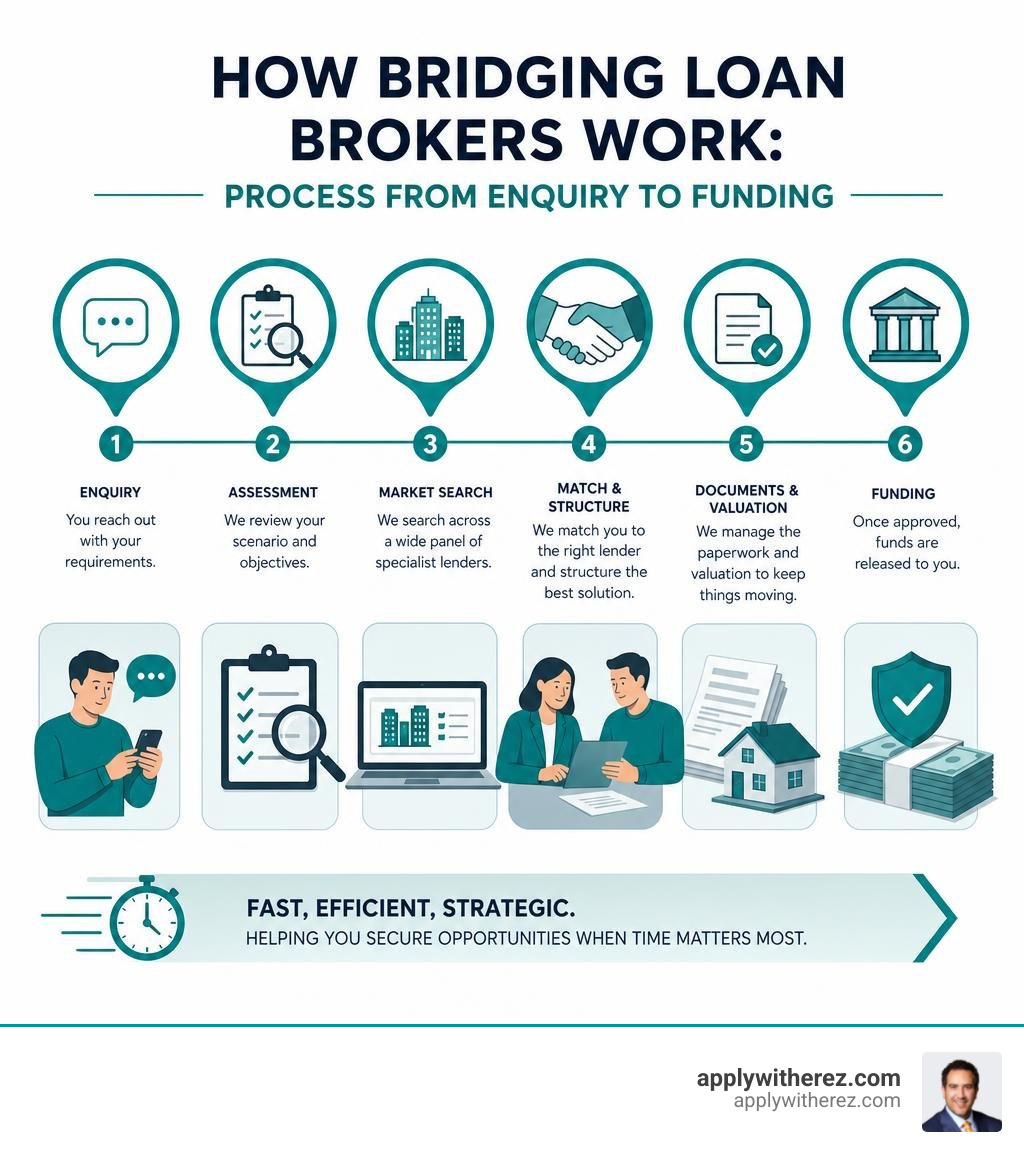
Searches the market across 50–130+ specialist lenders on your behalf
Matches your situation to the right loan product and lender criteria
Manages paperwork, valuations, and negotiations to speed up completion
Helps you structure a solid exit strategy lenders will accept
Can secure funding in as little as 7 working days (sometimes faster)
Sometimes a property deal can't wait weeks for a traditional bank to process a mortgage. A chain collapses. An auction deadline looms. A development site needs to be secured today, not next month.
That's exactly where bridging finance steps in — providing short-term funding secured against property, typically for 1 to 24 months, while you arrange longer-term financing or complete a sale.
But here's the thing: high street banks don't offer bridging loans. The entire market runs through specialist and private lenders who often don't accept direct applications from the public. Without the right intermediary, you simply can't access the best deals — or sometimes any deal at all.
In 2026, with competitive property markets and rising investor activity, knowing how to navigate this space quickly and smartly can be the difference between securing a property and losing it.
I'm Erez Shimoni, and with 26 years of mortgage industry experience, I've helped countless borrowers understand complex short-term finance options — including working with bridging loan brokers to match clients with the right funding for time-sensitive transactions. This guide will walk you through everything you need to know to move fast and move smart.
What is Bridging Finance and How Does It Work?

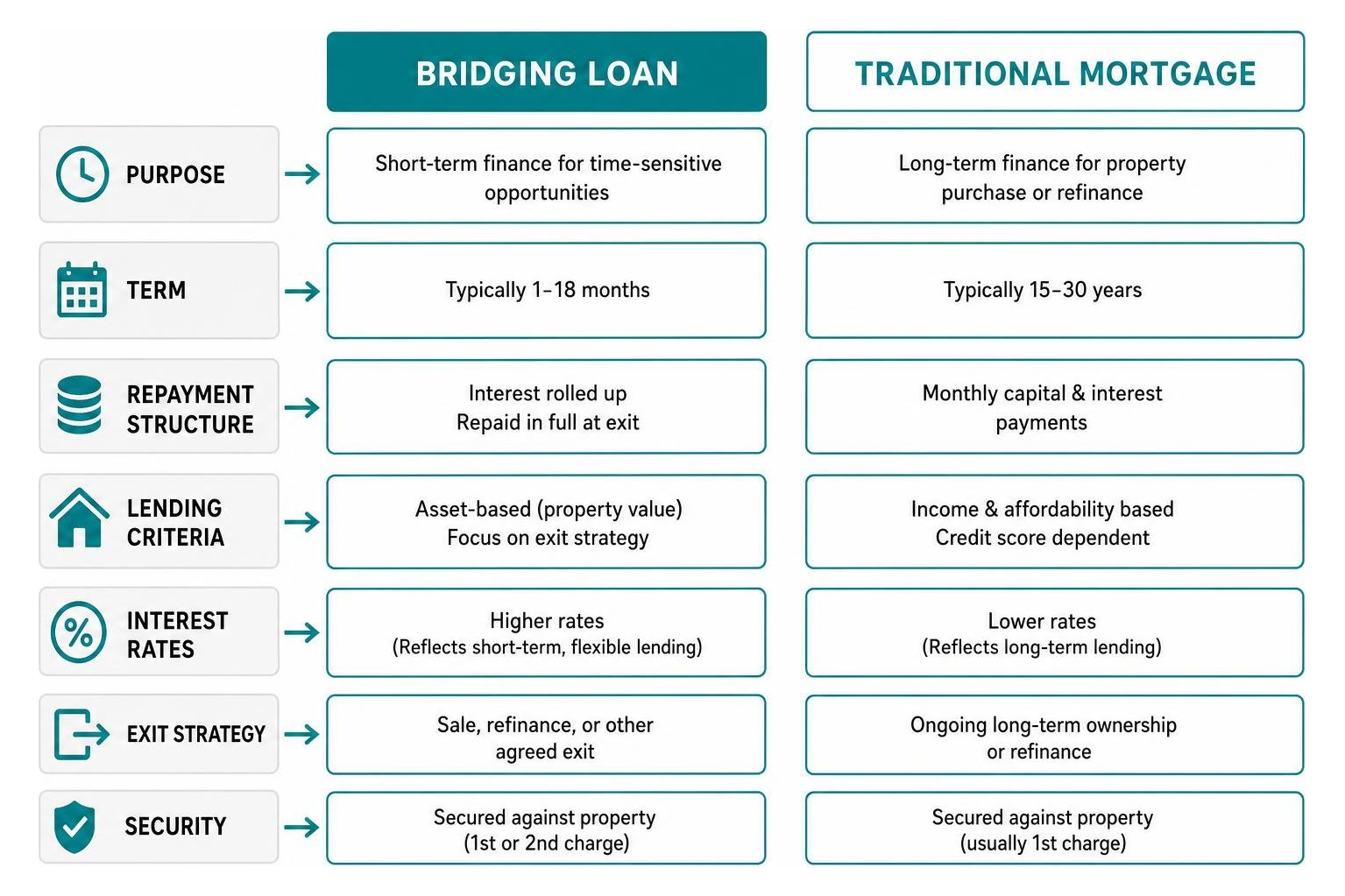
At its core, a bridging loan is a short-term, asset-backed funding solution designed to "bridge" a temporary cash flow gap. Unlike standard residential mortgages that span 25 to 30 years, bridging loans are highly flexible, sprint-style financial instruments. They typically run for terms of 1 to 24 months (and up to 36 months for some unregulated products), with the expectation that the loan will be repaid in full at the end of the term.
To understand how these loans operate, it is essential to look at the relationship between the loan-to-value (LTV) ratio, the required collateral, and the legal charges involved.
Bridging loans are secured against real estate or other high-value assets. Lenders will typically offer a maximum LTV of up to 75% to 80% of the property’s current open market value. The asset itself acts as the primary security, which is why lenders can prioritize speed over a borrower’s monthly income or historical credit score. For a deeper dive into the basic mechanics of these short-term options, you can read about the Bridge Loan: What Is It and How Does It Work?.
First-Charge vs. Second-Charge Loans
When you secure a bridging loan, the lender registers a legal charge against your property. This determines who gets paid first if the property has to be sold to recover the debt:
First-Charge Bridging Loan: If you own the security property outright or are completely replacing your existing mortgage with the bridging loan, the lender takes a "first charge." This means they have the primary legal claim to the property. Because this represents a lower risk for the lender, first-charge loans attract the most competitive interest rates.
Second-Charge Bridging Loan: If you have an active, ongoing mortgage on the property and want to secure a bridging loan behind it, the new lender takes a "second charge." If the property is sold, the first mortgage provider is paid back first, and the bridging lender is paid from the remaining equity. Because of the increased risk of not recovering their funds, lenders charge higher interest rates for second-charge loans.
For more information on how these structures compare to standard mortgage options, you can explore resources like this guide on the Bridge Loan or learn about consumer-focused applications via this article on the Bridge Loan.
Regulated vs. Unregulated Bridging Loans
The distinction between regulated and unregulated bridging loans is one of the most important concepts to understand before speaking with bridging loan brokers. This classification dictates the level of consumer protection you receive, the maximum loan term, and which lenders can bid on your deal.
Regulated Bridging Loans: A bridging loan is regulated by the Financial Conduct Authority (FCA) under MCOB 11 guidelines if the loan is secured against a property that is currently occupied, or will be occupied, by the borrower or an immediate family member as their main residence. Because these loans affect your home, they come with strict consumer protections. Regulated bridging loans are typically capped at a 12-month term to prevent borrowers from staying in expensive short-term debt for too long. If you are looking to purchase a new home before selling your current one, we can help you Buy a Home using structured, regulated options.
Unregulated Bridging Loans: If the loan is secured against a property that is strictly used for commercial, investment, or buy-to-let purposes, it is unregulated. This category covers property flipping, commercial-to-residential conversions, and large-scale developments. Because the borrowers are assumed to be business entities or experienced investors, these loans do not have the same FCA consumer protections. However, they offer far greater flexibility, with terms stretching up to 36 months and fewer restrictions on how the debt is structured.
Open vs. Closed Bridging Loans
When arranging short-term finance, your repayment timeline determines whether you need an open or a closed bridging loan. The choice directly impacts your interest rates and the lender's underwriting scrutiny.
Closed Bridging Loans: These loans have a highly specific, fixed repayment date. A classic example is a "chain-break" scenario where you have already exchanged contracts on the sale of your current home, and the completion date is set in stone for three weeks from now. Because the lender knows exactly when and how the loan will be repaid, closed bridging loans are considered low-risk and carry lower interest rates.
Open Bridging Loans: These are used when the exact repayment date is uncertain, though still bound by the maximum term of the loan (usually 12 to 24 months). For example, you might have found your dream home but haven't yet accepted an offer on your current property. While you have a clear plan to sell, you cannot guarantee the exact week the cash will arrive. Lenders charge a premium for open bridging loans and will perform more rigorous checks on your exit strategy to protect themselves against the deal dragging on.
Qualifying Properties and Collateral Requirements
One of the greatest benefits of bridging finance is its versatility regarding the types of property and collateral accepted. Mainstream mortgage lenders have rigid criteria; they will routinely reject properties that lack a working kitchen or bathroom, have structural issues, or are of non-standard construction.
Bridging lenders, on the other hand, look at the future value and the viability of the project. Qualifying properties include:
Residential Homes: Standard houses, apartments, and luxury high-value estates.
Commercial Property: Offices, retail units, warehouses, and semi-commercial mixed-use buildings.
Land: Ground plots with or without planning permission.
Unmortgageable Properties: Distressed homes, properties requiring heavy structural refurbishment, or houses bought at auction that need fast completion.
In some specialist scenarios, lenders will even consider alternative collateral to top up the loan-to-value ratio. If you lack a cash deposit but own other high-value assets — such as an existing buy-to-let portfolio, luxury vehicles, high-value jewelry, or even digital assets — specialized brokers can structure multi-asset loans to secure up to 100% of the purchase price.
Why You Need Specialist Bridging Loan Brokers for Fast Property Finance

It is technically possible to approach a handful of bridging lenders directly, but doing so is rarely in your best financial interest. The bridging market is highly fragmented, bespoke, and notoriously opaque.
Unlike standard mortgages, where rates are published on public comparison tables, bridging lenders do not always publicize their criteria or pricing matrices. Many of the most competitive private banks, family offices, and specialist boutique funds operate exclusively through trusted intermediaries.
By working with bridging loan brokers, you gain an advocate who understands the lending landscape. To see how these specialists help buyers navigate the market and secure properties quickly, you can watch this explanation of What Is a Bridging Loan | Home Buying Advice .
What is the Role of Bridging Loan Brokers?
A specialist broker does far more than simply hand you a list of rates. They act as your project manager, financial architect, and negotiator. Their day-to-day responsibilities include:
Bespoke Debt Structuring: Assessing your unique financial profile, the property asset, and your timeline to design a loan structure that minimizes costs.
Lender Matchmaking: Identifying which lenders have the specific appetite for your deal. For example, some lenders love light refurbishments but hate ground-up developments; others specialize in high-value international transactions.
Managing the Valuation Process: Coordinating with surveyors to arrange desktop, automated (AVM), or physical valuations to keep the application moving.
Liaising with Legal Teams: Bridging loans frequently stall during the legal underwriting stage. A broker works closely with specialized solicitors to push the paperwork through.
If you are facing a tight deadline and need an expert to structure your short-term finance, you can Book a Call with our team to discuss your options.
How Bridging Loan Brokers Find the Best Market Rates
Brokers leverage their deep industry relationships and modern digital sourcing platforms to compare rates across the entire market. In 2026, market-leading monthly interest rates start from as low as 0.45% to 0.55% PCM (per calendar month) for low-LTV residential transactions, ranging up to 1.5% PCM for more complex commercial or development projects.
An experienced broker will also protect you from looking only at the headline interest rate. They understand the difference between Net and Gross loan calculations:
Gross Loan: The total amount you borrow, which includes the net loan amount plus rolled-up interest, arrangement fees, and broker fees.
Net Loan: The actual cash in hand you receive on the day of completion to put toward your property purchase.
Lenders often advertise high gross LTVs for marketing purposes, but once all fees are deducted, the actual net cash you receive might fall short of your requirements. A broker will run these calculations upfront to ensure you have enough capital to complete your transaction.
To learn more about how professional brokers operate across the UK, you can explore resources like UK Bridging Loans & Finance, read a UK Bridging Loans Guide, or consult specialist mortgage resources.
Navigating Complex Situations, Bad Credit, and Loan Costs
Bridging finance is uniquely suited for complex financial scenarios that would cause traditional high street lenders to immediately reject an application. Whether you are purchasing a property through a Special Purpose Vehicle (SPV), utilizing an offshore trust, or managing a multi-asset portfolio, a specialist broker can package your application to highlight the strength of your assets.
To help you visualize how bridging finance compares to a traditional mortgage, review this structural comparison:
Can I Get a Bridging Loan with Bad Credit?
Yes. One of the most common misconceptions is that you need a flawless credit history to secure a bridging loan.
Because bridging loans are short-term and typically do not require regular monthly payments (the interest is rolled up and repaid at the end), lenders are not overly concerned with your monthly debt-to-income ratio or historical credit blips. Instead, they focus on two primary pillars:
The Security Asset: Is there enough equity in the property to cover the loan if things go wrong?
The Exit Strategy: Is there a highly viable, realistic plan to repay the loan in full?
If you have experienced bankruptcy, defaults, or county court judgments (CCJs), you can still secure bridging finance. Lenders will look past your credit file as long as your exit strategy — such as selling the property or transitioning to a long-term mortgage once the property is refurbished — is robust and achievable.
Understanding Bridging Loan Costs and Broker Fees
While bridging loans offer unmatched speed and flexibility, they are a premium financial product. It is vital to understand all the associated costs before signing an agreement.
Monthly Interest Options:
Rolled-Up Interest: The most common method. No monthly payments are made. Instead, the interest is calculated monthly and added to the loan balance, to be paid as a lump sum at the very end.
Retained Interest: The lender estimates the total interest for the term and deducts it from the initial loan advance, meaning you receive a lower net amount on day one.
Serviced Interest: You pay the interest monthly, similar to a standard interest-only mortgage. This is only available if you can prove sufficient monthly income.
Lender Arrangement Fees: Typically 1% to 2% of the total loan amount, charged by the lender for setting up the facility.
Broker Fees: Usually around 1% of the loan value. However, some brokers work on a fee-free basis for very large transactions if they are compensated directly via a procurement fee from the lender.
Exit Fees: Some lenders charge a fee (typically 1%) when you repay the loan, though many modern bridging products feature no exit fees.
Valuation and Legal Fees: You will need to cover the cost of the lender’s property valuation (which can sometimes be done via a cheaper desktop model) and the legal costs for both your solicitor and the lender's solicitor.
If you are looking to transition from a short-term bridging loan back to a lower-cost, long-term mortgage, we can help you Refinance your debt smoothly. If you are an older homeowner looking to release equity to fund a purchase, you might also want to explore a Reverse Mortgage as a potential long-term exit plan.
Frequently Asked Questions About Bridging Finance
How quickly can funds be released with a bridging loan?
In straightforward cases where a desktop or Automated Valuation Model (AVM) is acceptable and legal paperwork is prepared, bridging loans can complete in as little as 24 to 48 hours. However, the standard industry timeline for a bridging loan to complete is 7 working days to 4 weeks, depending on the complexity of the property valuation and the speed of the solicitors involved.
For fast-tracked options, you can consult independent specialists or check out London bridging and development finance options.
Do you need an exit strategy for a bridging loan?
Yes, a clearly defined and viable exit strategy is the single most critical requirement for securing a bridging loan. Lenders will not approve a loan without knowing exactly how they will get their money back. The most common exit strategies include:
Selling the Property: Redeveloping or refurbishing a property and selling it on the open market.
Refinancing: Transitioning the short-term bridging debt onto a standard residential or buy-to-let mortgage once the property is habitable or credit issues are resolved.
Capital Events: Using a guaranteed future cash injection, such as an inheritance, a business sale, or the maturity of an investment portfolio.
What credentials should I look for in a bridging loan broker?
When selecting a broker, you should ensure they hold the proper industry credentials and have specialist short-term finance experience. Look for:
FCA Authorization: If you require a regulated bridging loan, your broker must be authorized and regulated by the Financial Conduct Authority (FCA) and hold relevant qualifications like CeMAP.
Professional Memberships: Look for brokers who are members of recognized trade bodies, such as the National Association of Commercial Finance Brokers (NACFB) or the Financial Intermediary and Broker Association (FIBA).
Fee Transparency: A reputable broker will provide a clear, written breakdown of all upfront fees, commitment fees, and commissions before you commit.
To find highly qualified, independent advisers, you can explore services like this independent whole-of-market service, work with a large-scale intermediary, or read about regional advisory teams offering bridge loan services.
Conclusion
In a property market, the ability to secure funding quickly is a powerful strategic advantage. Bridging finance offers the speed and flexibility needed to rescue broken property chains, win competitive bids at auction, and fund profitable renovation projects that standard banks won't touch.
However, because the short-term market is highly specialized, navigating it alone can be costly and confusing. Working with a dedicated bridging loan broker ensures you gain access to the widest possible panel of lenders, secure competitive market rates, and structure a safe, reliable exit strategy.
If you have a time-sensitive property transaction and want to explore your short-term financing options with a team you can trust, Contact us today.
Secure your short-term bridge financing today with Apply with Erez and let us help you bridge the gap to your next property success.